Signs your electrical panel may need attention
Your home's electrical panel works quietly behind a metal door, distributing power to every room. Most homeowners never think about it until something goes wrong. But like any piece of equipment that handles a heavy load day after day, it can develop problems that are worth catching early. A panel safety upgrade can address many of these issues before they turn into bigger concerns. Knowing what to look for helps you decide when to call a qualified electrician for an evaluation.
Warmth or heat coming from the panel
An electrical panel should feel cool to the touch. If you place your hand near the door and notice warmth, something inside is generating more heat than it should. Heat in an electrical panel often points to an overloaded circuit or a loose connection. Both conditions create resistance, and resistance produces heat. Over time, that heat can damage the insulation on wires and increase the risk of an arc fault. An arc fault is a high-energy discharge that can jump between conductors and ignite nearby materials. If your panel feels warm, have a licensed electrician inspect it promptly. They can identify the source and recommend a panel safety upgrade if the panel itself is undersized or outdated.
Frequent tripping of breakers
Circuit breakers trip when they detect an overcurrent condition - more current flowing than the circuit is designed to handle. Occasional tripping can happen when you run a high-power appliance on a circuit that also serves other loads. But if a breaker trips regularly, or if multiple breakers trip without an obvious reason, the panel may have a deeper issue. Overloaded panels are common in older homes where the electrical system was never designed for modern appliances, electronics, and HVAC equipment. A panel safety upgrade can replace an undersized panel with one that provides adequate capacity and proper overcurrent protection for every circuit.
Burn marks, discoloration, or rust
Open the panel door and look at the breakers and the metal surface inside. Dark spots, scorch marks, or a brownish discoloration around a breaker indicate that it has overheated at some point. Rust or corrosion inside the panel suggests moisture has been getting in. Moisture is a serious problem because it can cause ground faults - unintended paths for current to flow to the ground. Ground faults can lead to shocks or fires. If you see burn marks or rust, do not touch anything inside the panel. Close the door and call an electrician. They will check for loose connections, damaged breakers, and signs of water entry, and can advise whether a panel safety upgrade is necessary to bring the system up to current electrical code standards.
Sounds from the panel: buzzing, crackling, or humming
A properly working electrical panel is silent. If you hear a buzzing or humming sound, it often means a breaker or a connection is vibrating under load. A crackling sound is more serious - it can indicate an arc fault inside the panel. Arc faults produce intense heat and can easily start a fire if they continue. Any audible noise from the panel is a reason to have it inspected. An electrician can locate the source of the sound and determine if a simple repair will fix it or if the panel needs a full replacement. A panel safety upgrade may be the most practical solution when multiple breakers show signs of wear or the panel itself is an older model that no longer meets modern safety requirements.
Breakers that feel loose or hard to reset
Breakers should switch on and off with a crisp, firm action. If a breaker feels spongy, moves sideways, or will not stay in the on position, it has likely failed internally. A failed breaker cannot provide reliable overcurrent protection. When a breaker cannot trip properly, a fault condition could persist long enough to damage wiring or start a fire. Loose breakers can also indicate that the panel bus bar - the metal strip that distributes power to the breakers - is damaged. Replacing a single breaker may solve the problem, but if the panel has several loose breakers or the bus bar shows signs of wear, a panel safety upgrade is often the more reliable long-term answer.
Outdated panel type or age
Electrical panels have a service life. Many panels installed before the 1980s used designs that are now considered less safe. Some older panels use fuses instead of circuit breakers. Fuses work, but they are less convenient and can be over-fused by homeowners who replace a blown fuse with one rated for a higher current, creating an overcurrent hazard. Other older panels use breakers that are no longer manufactured, making replacements hard to find. If your panel is more than 30 years old, it is worth having it evaluated. An electrician can tell you whether it still meets current electrical code requirements. A panel safety upgrade from an older panel to a modern breaker panel provides better protection against arc faults, ground faults, and overcurrent conditions.
Insufficient clearance around the panel
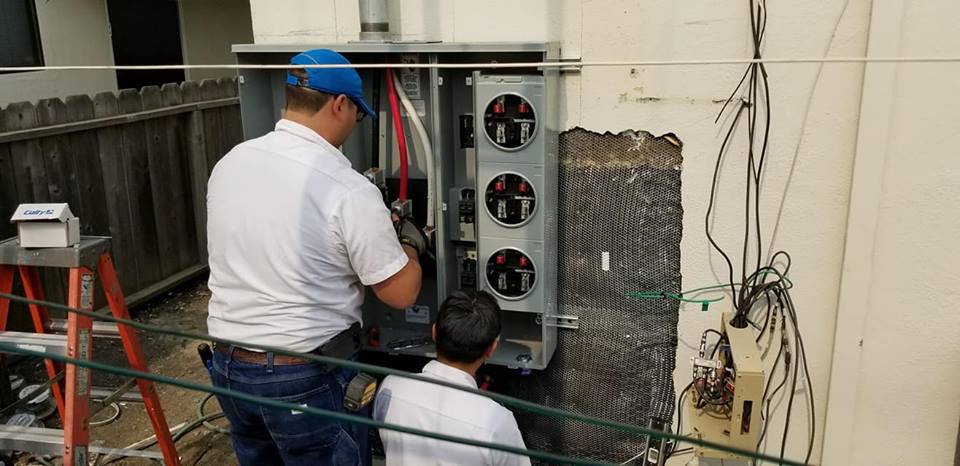
Electrical codes require a clear working space in front of the panel. The National Electrical Code specifies a minimum clearance of 30 inches wide and 36 inches deep in front of the panel. This space allows an electrician to work safely and access the panel in an emergency. If the area in front of your panel is blocked by stored boxes, furniture, or shelving, that is a safety hazard. Clear the space so the panel is always accessible. If the panel itself is installed in a location that does not meet current clearance requirements - for example, in a tight closet or behind a fixed obstruction - a panel relocation or a panel safety upgrade with a new panel placed in a better location may be needed.
Grounding and bonding issues
Proper grounding gives fault currents a safe path back to the panel, which allows breakers to trip quickly. Bonding connects the metal parts of the electrical system - like the panel enclosure and the grounding electrode - so they stay at the same voltage. If grounding or bonding is missing or damaged, the system may not clear a fault properly, and metal surfaces could become energized. Signs of grounding problems include breakers that do not trip when they should, or a tingling sensation when touching a metal appliance. These are serious issues that require immediate attention from a licensed electrician. An inspection can verify that the panel is properly grounded and bonded, and a panel safety upgrade can correct any deficiencies found.
When to call a professional
Any of the signs above is a reason to contact a qualified electrician. Do not attempt to open the panel cover or work inside the panel yourself. The voltages inside an electrical panel can be lethal, and the risk of arc flash is real. A professional can perform a thorough evaluation, identify all hazards, and recommend the right solution. For homeowners in the San Jose and Bay Area region, woodingelectric.com offers evaluations and upgrades for residential electrical panels. A panel safety upgrade may involve replacing an outdated panel, adding circuits, or installing arc-fault circuit interrupters (AFCIs) and ground-fault circuit interrupters (GFCIs) for enhanced protection. The goal is a system that meets current electrical code and provides reliable, safe power for your home.
Keeping an eye on your electrical panel is a simple habit that can prevent bigger problems. A visual check every few months - looking for heat, discoloration, sounds, or loose breakers - costs nothing and can catch issues early. If you notice anything unusual, act on it. A timely evaluation and, if needed, a panel safety upgrade can give you peace of mind and keep your home's electrical system running safely for years. For more information on panel safety and upgrade options in the Bay Area, woodingelectric.com is a resource worth consulting.